Literature review
Explored consumer vulnerability, marketplace exclusion, disability, representation, and digital accessibility to establish the project’s theoretical foundation.
Building a curated fashion marketplace for women with Down syndrome.
A curated marketplace connecting fashion, accessibility, and self-expression.
01 / The idea
How can we rethink accessibility and inclusion in the fashion marketplace to better address the needs and experiences of women with Down syndrome?
Tri-It On began with a focus on the barriers women with Down syndrome can face when shopping for clothing: finding the right fit, navigating overwhelming choices, and seeing themselves represented.
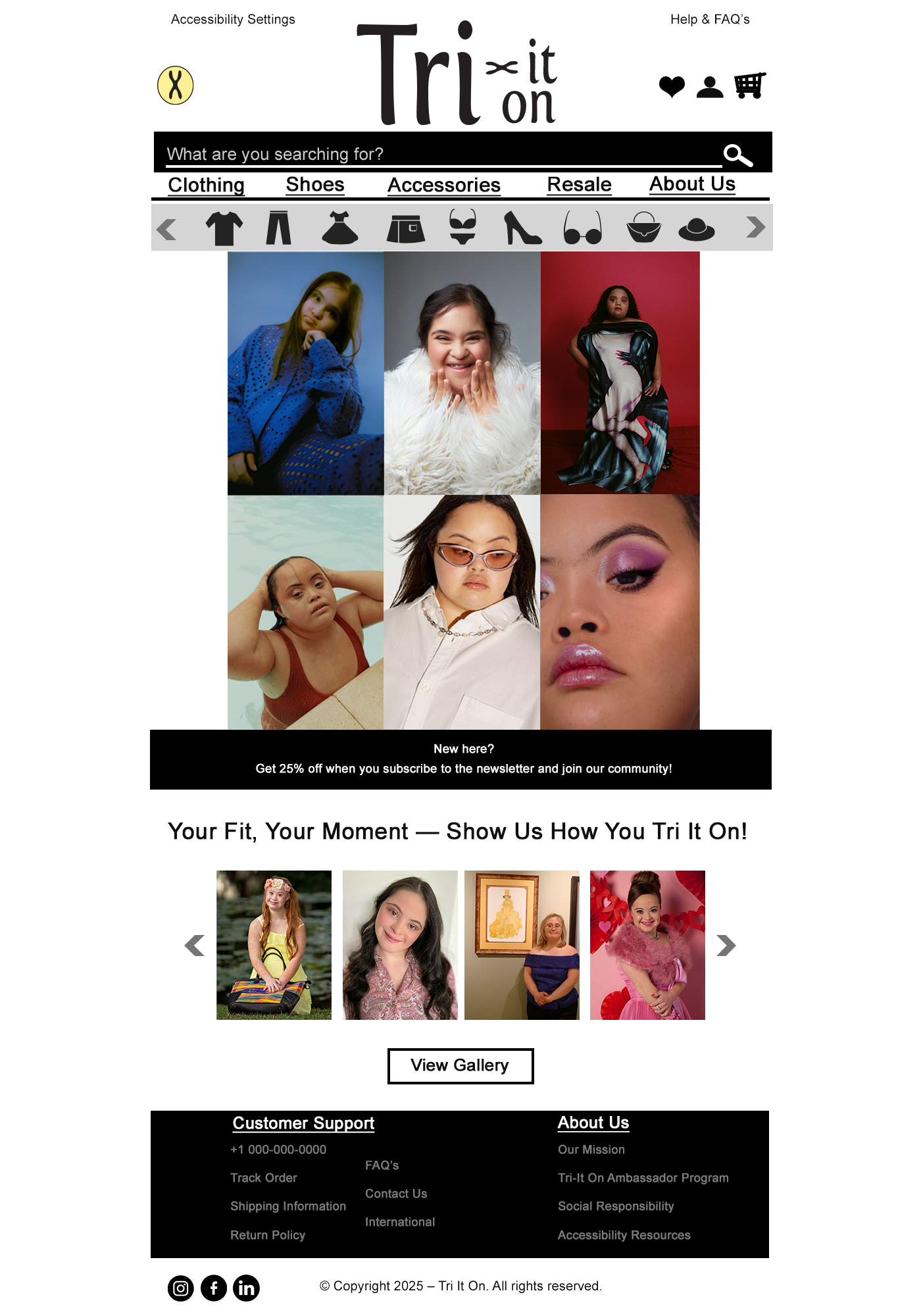
I developed the concept for a curated digital marketplace that brings together clothing from existing brands, accessible content, and inclusive storytelling. The aim is to support personal style, independence, and greater choice within the shopping experience.
02 / Research
I combined a literature review with stakeholder interviews and a community survey to explore shopping habits, fit challenges, accessibility, and self-expression.
Explored consumer vulnerability, marketplace exclusion, disability, representation, and digital accessibility to establish the project’s theoretical foundation.
Asked about everyday shopping experiences, clothing fit, personal preferences, and the role of support in purchasing decisions.
Gathered exploratory feedback on clothing challenges, shopping habits, comfort, ease of dressing, and self-expression.
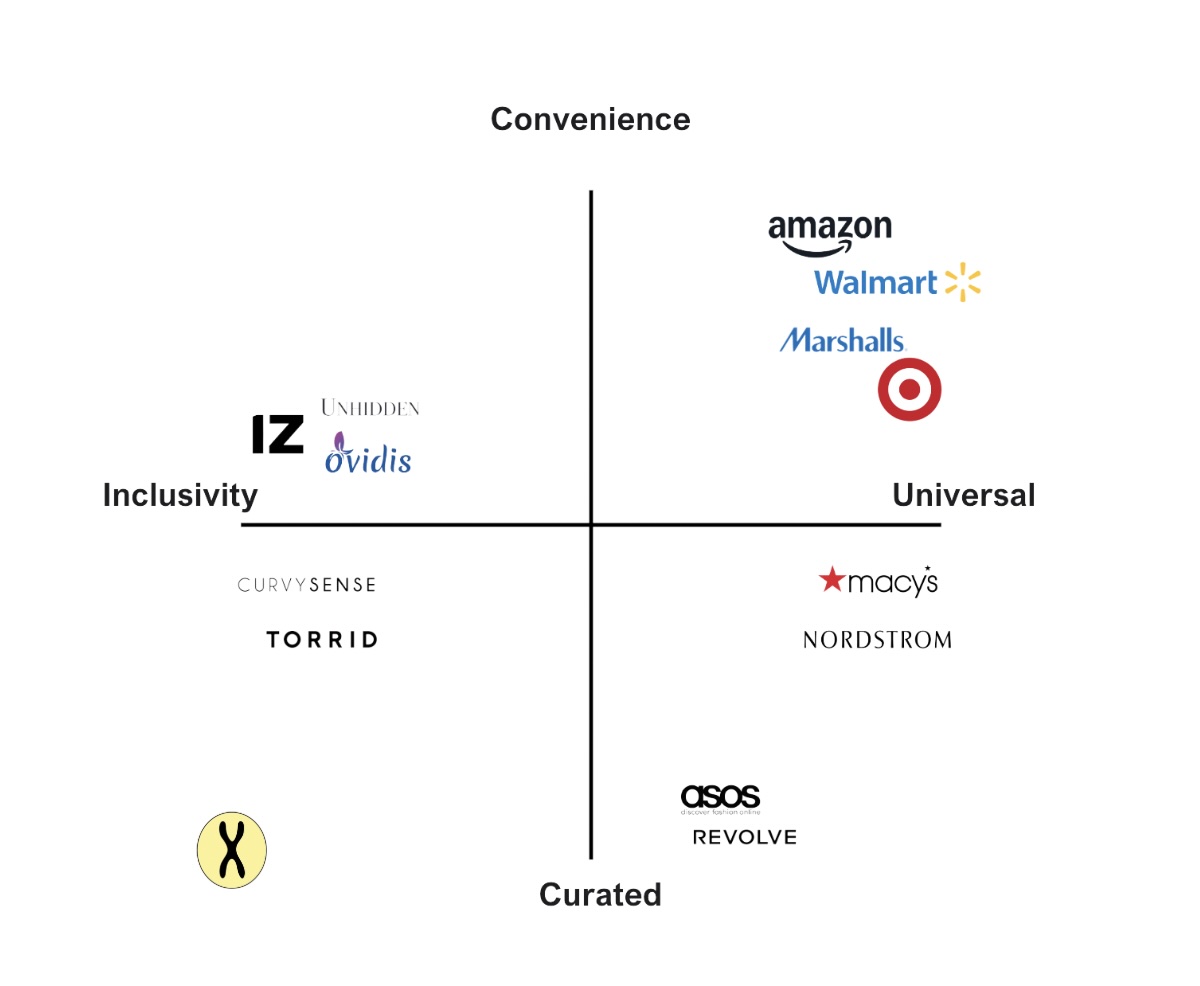
Considered mainstream and inclusive fashion retailers to explore where a curated, audience-focused marketplace could fit.
03 / Strategy
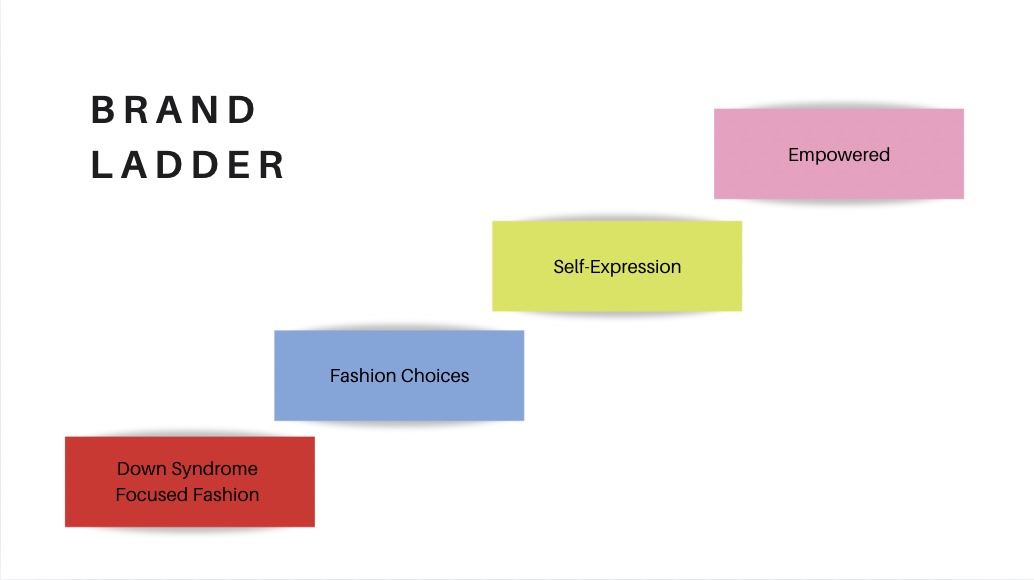
The research became the foundation for defining the target audiences, analyzing the competitive landscape, and developing the brand’s positioning.
U.S. women ages 15–60 across income levels who value self-expression, community, and independent choices. Accessible navigation and relevant fit information support shopping with confidence.
U.S. parents, caregivers, and loved ones seeking clear information and thoughtful curation that simplify shopping while supporting the individual’s preferences and independence.
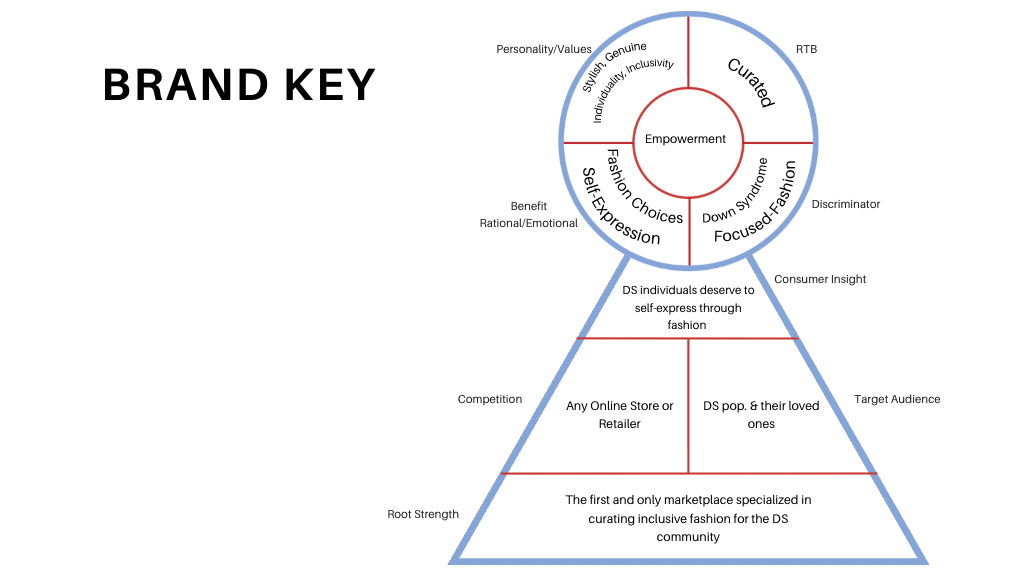
Prioritize fit, comfort, ease of use, and personal style when considering products for the marketplace.
Make women with Down syndrome central to the brand’s imagery, voice, and storytelling, with an adult audience in mind.
Use readable layouts, plain language, and a considered selection to support confident decisions and digital accessibility.
04 / Creative work
I carried the project’s focus on inclusion and self-expression into its visual identity, website, and written content, connecting the strategic concept to an experience people could explore.
 EmpoweringRedefiningEquity
The copywriting presentation brings together the brand’s purpose, values, manifesto, audience profiles, and example campaign copy.
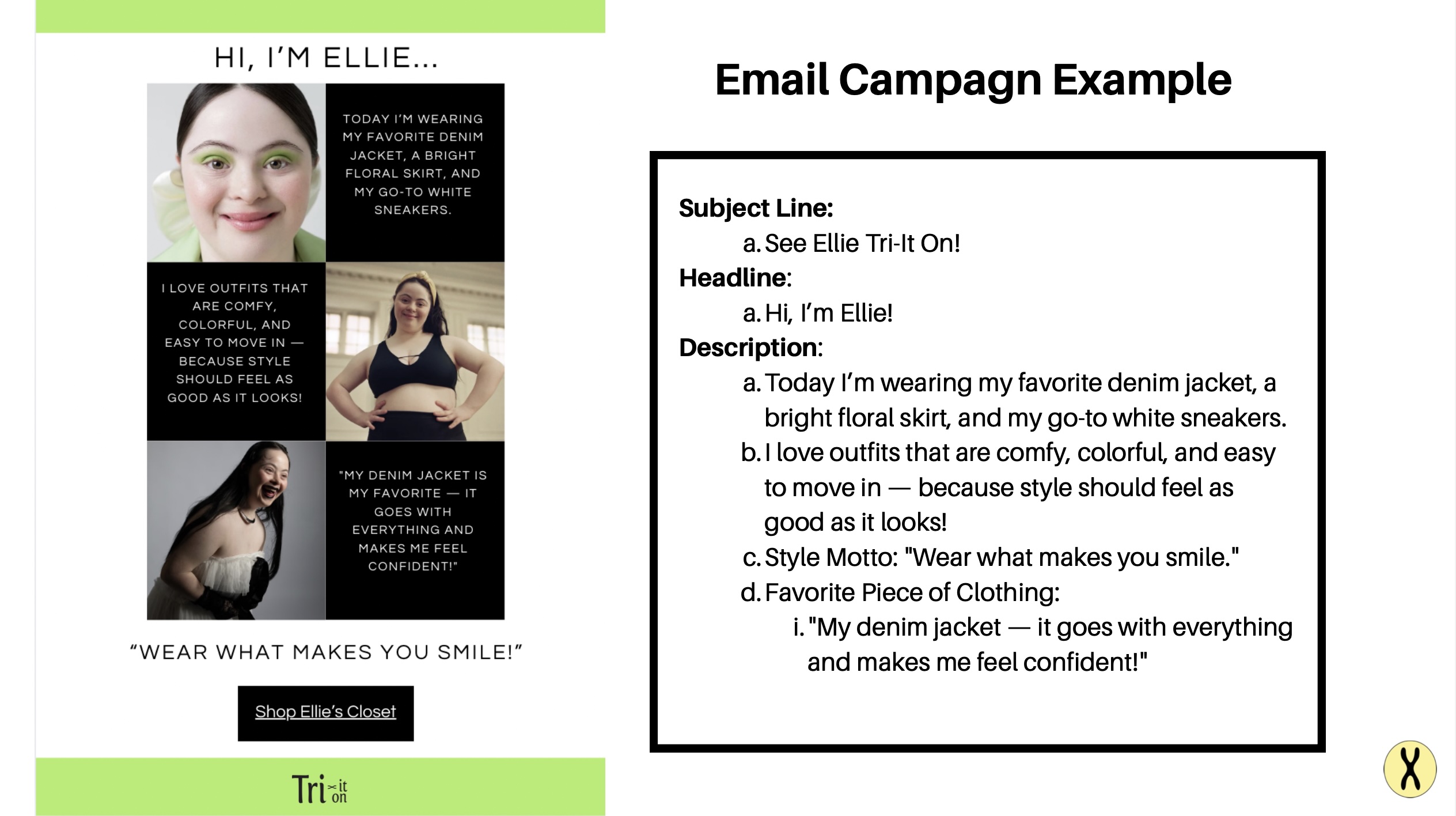
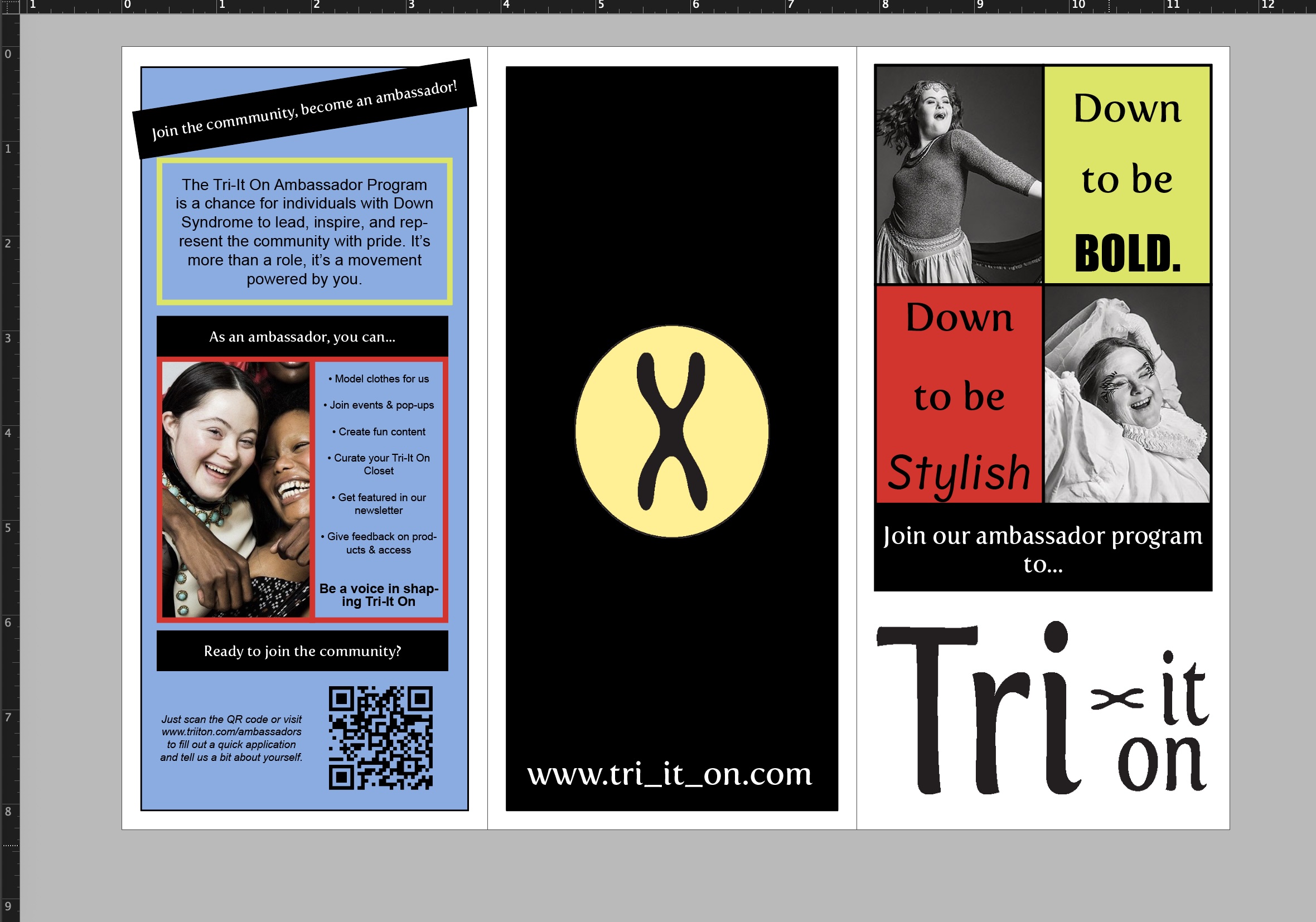
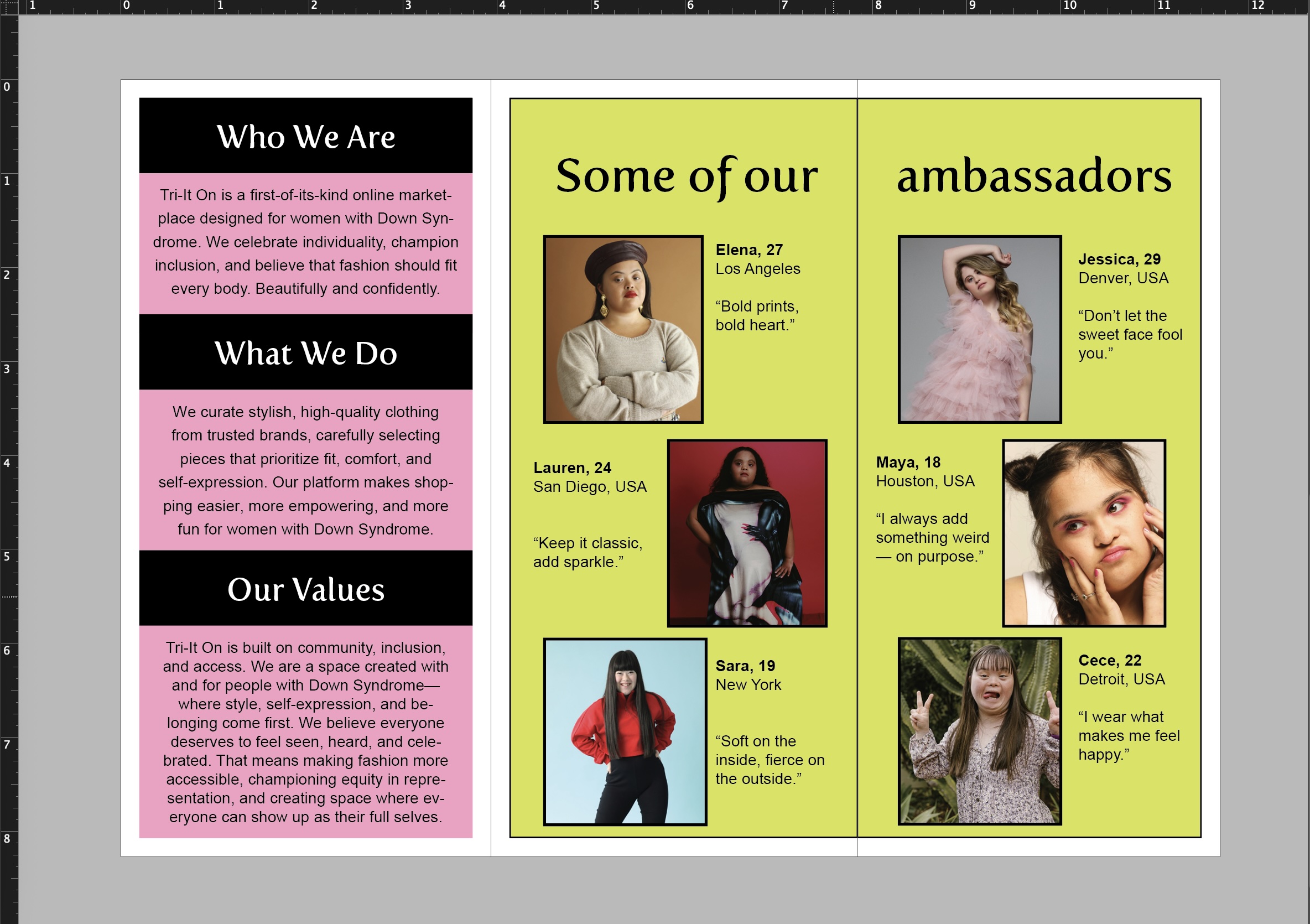
A print concept extending the brand into community participation, with a proposed ambassador program, campaign language, and sample profile layouts.
05 / Bringing it to life
The project brought together research, a business plan, brand development, and a digital prototype. It created a foundation for further community feedback, product curation, and future partnerships.
One of the clearest lessons was that an accessible website is one part of a wider shopping experience. Fit, transportation, financial support, and individual preferences also shape how people make choices.
Explores the development of Tri-It on in detail documenting the progression from initial concept development through research, stakeholder engagement, branding, website planning, implementation strategy, and future recommendations. It demonstrates the application of strategic communication, branding, and research methodologies.